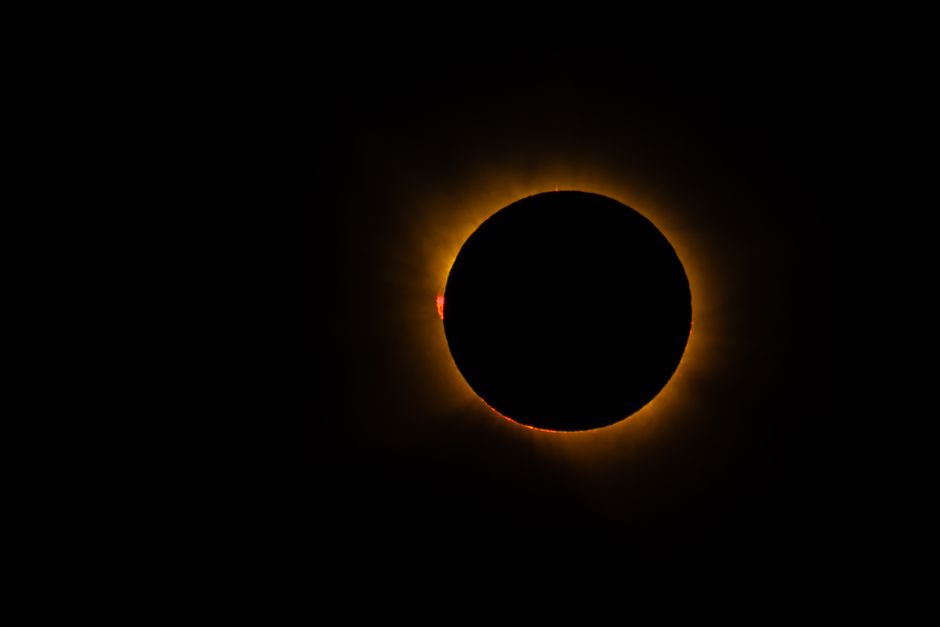
Millions of people across Europe stopped in their tracks on Wednesday to witness a rare total solar eclipse that swept parts of the continent into sudden darkness — and now Australians are asking when it will be their turn. The answer: 22 July 2028, when a total solar eclipse will carve a dramatic path across the Australian continent, passing directly over Sydney for the first time in more than 170 years.
Europe's Eclipse: A Once-in-a-Generation Moment
Wednesday's celestial event drew excited crowds to prime viewing spots across the continent, with the best conditions found in Spain and Portugal, as well as parts of Greenland and Iceland. Observers in the UK, northern Italy, France, Switzerland and Belgium were treated to a partial eclipse, where the moon obscured only a portion of the sun rather than blotting it out entirely.
Among the crowds in Medinaceli, northeast Spain, a German physics student who had travelled specifically for the occasion described the anticipation. "It's the first time in my lifetime that I'll get to see a total eclipse in Spain," they said. "I'm not sure where the next one is, so it'll be great to see it."
At the Royal Observatory in London, one witness captured the mood of the day perfectly. "It's an event — once in a blue moon," they said. "It's important, it's magical, it's fantastic, so I'm here to see it."
It was the first total solar eclipse to cross mainland Europe in more than two decades, a fact that underscored just how rare these events truly are — even for densely populated continents.
What Is a Total Solar Eclipse?
A total solar eclipse occurs when the moon passes precisely between the Earth and the sun, aligning so perfectly that it completely blocks the sun's face from view. The result is a brief, eerie darkness — more like dusk or dawn than daytime — and a breathtaking reveal of the sun's corona, its outermost atmospheric layer, which is normally invisible to the naked eye.
This is fundamentally different from a partial solar eclipse, in which the three bodies align but the moon only covers part of the sun. While a partial eclipse is still a notable event, it lacks the dramatic totality — the sudden temperature drop, the confused wildlife and the encroaching shadow — that makes a total eclipse such a visceral experience.
Australia's 2028 Total Solar Eclipse: Path, Timing and Cities
Total solar eclipses are rare anywhere on Earth. For Australia, they are rarer still. In the past 50 years, just five total solar eclipses have been visible from the Australian continent — in 1974, 1976, 2002, 2013 and 2023 — and most of those only grazed a northern or southern tip. The 2023 eclipse, for instance, passed off the North West Cape of Western Australia before heading northeast over Indonesia and Papua New Guinea.
The 2028 eclipse will be markedly different. Sometimes referred to as the Great Australasian Eclipse, it will cut a wide path across the heart of the continent, giving millions of Australians a front-row seat to totality.
The eclipse's path of totality — the corridor within which the moon will completely obscure the sun — will track as follows:
- The Kimberley, Western Australia — totality begins at approximately 11am AWST
- Northern Territory
- South-western Queensland
- Rural and regional NSW
- Sydney — totality arrives at approximately 2pm AEST, lasting around four minutes
For Sydney, the significance is profound. It will be the city's first total solar eclipse since 1857. According to NASA, the next one after 2028 won't reach Sydney for another 800 years — not until 3 June 2858. When the eclipse continues on to Dunedin, New Zealand, later that afternoon, it will be the first total eclipse seen from that city since 1163.
The 2028 event is also the second in a series of five total solar eclipses visible from Australia between 2023 and 2038.
Residents of Melbourne, Brisbane, Adelaide, Perth, Darwin, Hobart and Canberra will all experience a partial eclipse, with the moon covering a portion of the sun — but skies in those cities will not go dark as they will in Sydney and along the path of totality.
What to Expect When Totality Arrives
The Astronomical Association of Queensland has described what those within the path of totality can expect as the eclipse approaches. As totality nears, temperatures will gradually fall and light will fade — enough to disorient birds and animals. In the final minutes before totality, the moon's shadow may become visible sweeping across the landscape.
"As this is a long eclipse with a wide path, the shadow may be well defined and is likely to appear as a very dark thunderstorm approaching swiftly and silently from a generally north-west direction," the association explained.
Towards Sydney and the eastern end of the eclipse path, the shadow will become more inclined as it reaches the edge of the totality corridor, making it appear darker and more sharply defined than it will further west. A sudden chill in the air and a brief wind may also be felt as the umbra passes overhead.
For those using safe solar filters — which are essential for viewing any stage of an eclipse other than totality itself — the final moments before darkness will reveal the sun shrinking to a thin crescent, then narrowing to pinpoints of light shining through valleys on the moon's edge, before vanishing entirely as the sky goes dark.
With nearly two years still to go, planning and preparation can begin in earnest — but for now, the scenes from Europe offer a tantalising preview of what Australia has to look forward to.