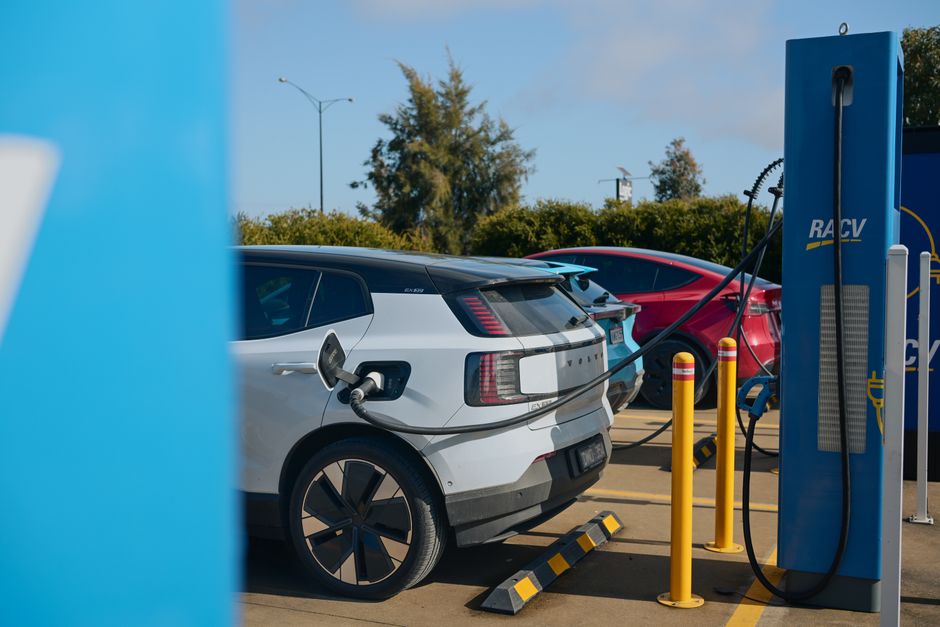
Australia's economy expanded by 0.4 per cent in the June quarter, with a surge in electric vehicle and hybrid car purchases emerging as a standout driver of growth, as households adapted to soaring oil prices triggered by the United States' military conflict with Iran and the closure of the Strait of Hormuz.
The Australian Bureau of Statistics released the national accounts data this morning, revealing that annual economic growth eased to 2.1 per cent across the 2025–26 financial year — a modest result that underscores continued caution among Australian consumers and businesses alike.
Record EV and Hybrid Sales Carry Household Spending
Household spending rose by 0.4 per cent during the quarter, contributing roughly half of the economy's overall growth. However, that lift was heavily concentrated in one area: the automotive sector. The Bureau noted that EV and hybrid vehicle sales hit a record high in the quarter, as Australians moved decisively to reduce their exposure to sharply higher fuel costs stemming from the global oil market disruption.
Beyond cars, the picture was considerably more subdued. Discretionary spending in other categories remained constrained by persistent cost-of-living pressures. International tourism saw a particularly sharp decline, a sign that many households are pulling back on big-ticket leisure expenditure. Even essential spending softened, with outlays on electricity and gas falling — a reflection of a warmer-than-normal winter reducing demand for home heating.
Business Investment Flat Despite Data Centre Activity
Private investment, which had been a notable bright spot in the March quarter, stalled in the June quarter. The Bureau attributed this to a sharp fall in imports of data processing equipment used in new data centre construction — a reversal that weighed heavily on overall business investment figures.
That said, firms continued to build new data centre facilities, and there were increases in engineering construction tied to renewable energy and mining projects. Dwelling construction also edged higher, supported by an ongoing pipeline of new home builds working through the system.
Trade Sector Posts First Positive Contribution Since Late 2023
One of the more encouraging signals in the data was the trade sector's return to positive territory. A lift in exports meant that net trade made a positive contribution to GDP growth for the first time since late 2023. Public demand also provided a boost during the quarter.
However, the Bureau's head of national accounts, Grace Kim, tempered the overall outlook, noting that growth remained restrained by cautious household behaviour and the moderating effect of imports.
"While increased spending and business investment occurred in pockets of the economy, imports supported much of the growth, moderating its contribution to overall GDP growth," Kim said.
State-by-State: NT and Queensland Lead, Victoria Lags
At the state level, performance was uneven. The Northern Territory recorded the strongest growth in state final demand, up 1.4 per cent, followed closely by Queensland at 1.1 per cent. Victoria, by contrast, was the weakest performer, with state final demand falling 0.3 per cent, partly driven by a sizeable contraction in both private and public investment.
The overall result points to an economy that is growing — but unevenly, and largely on the back of one-off factors like the EV rush. With cost-of-living pressures continuing to weigh on Australians' broader financial wellbeing, the durability of consumer-led growth remains an open question heading into the next quarter.