An Australian astronomer has joined an international research team that may have cracked one of physics' longest-standing unsolved mysteries — detecting a phenomenon first theorised by Nobel Prize winner Werner Heisenberg nearly 90 years ago. The findings, published Thursday in the prestigious journal Nature, could open what scientists are calling a "new cosmic window" in quantum physics and deepen our understanding of the universe.
A Physics Cold Case Nearly a Century in the Making
Back in 1936, Heisenberg and his student Hans Euler proposed that seemingly empty space is not truly empty at all. Their theory of vacuum birefringence suggests that a vacuum teems with virtual particles that flicker in and out of existence and are capable of altering the path of light. For decades, the idea remained one of physics' most tantalising — and elusive — unsolved puzzles.
Attempts to prove the theory using powerful lasers and particle accelerators on Earth have repeatedly fallen short, simply because the magnetic fields required to make the effect visible cannot be generated here. "The kinds of magnetic fields that you need just don't exist on Earth," said Dr Marcus Lower, an astronomer at Swinburne University of Technology and a key member of the research team. "People have been looking for this effect going back to when Heisenberg came up with it in the 1930s."
Magnetar, Supercomputer and the Dish Join Forces
The breakthrough came through a combination of cutting-edge instruments and years of persistent effort. The team trained their instruments on a rare type of neutron star known as a magnetar — designated 1E1547 — whose magnetic fields are so extraordinarily powerful that the vacuum birefringence effect should, in theory, become detectable.
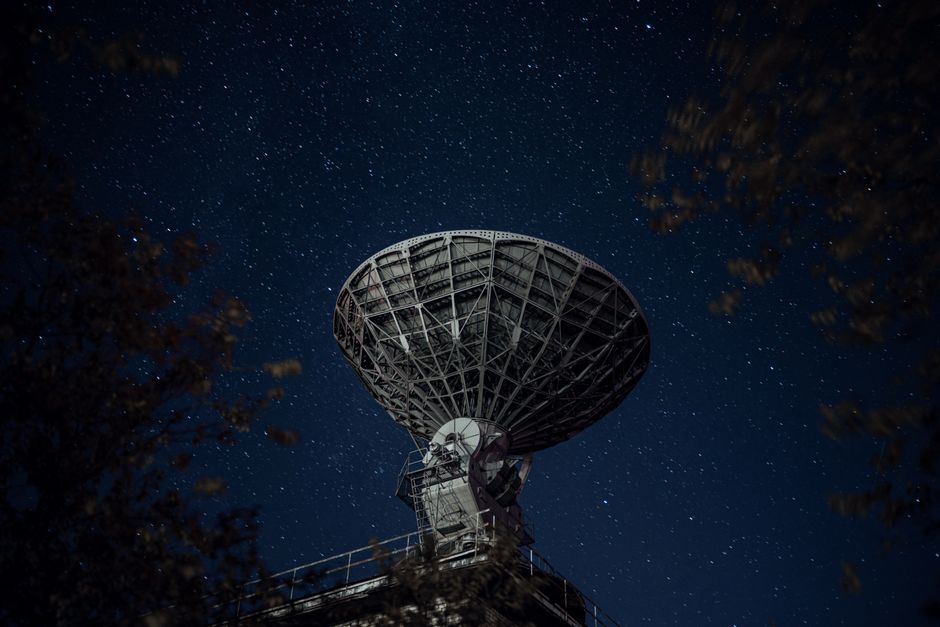
Observations were gathered using NASA's Imaging X-ray Polarimetry Explorer, NASA's NICER telescope aboard the International Space Station, and the CSIRO's iconic Murriyang radio telescope near Parkes in rural New South Wales — the same facility that inspired the beloved Australian film The Dish. The raw data was then subjected to intensive analysis using Swinburne's supercomputer, Ngarrgu Tindebeek.
The result: what may be the first-ever confirmed detection of vacuum birefringence in a magnetar's field.
The road to this point was far from straightforward. The team was initially rejected when they first applied for access to NASA's instruments, only receiving approval after submitting a revised proposal. It was ultimately advances in telescope technology over the past six years that made the detection achievable. "It's only in the last six or so years that we've actually had a telescope capable of detecting this effect around magnetars," Dr Lower said.
Cautious Optimism Over a Landmark Discovery
Despite the significance of the result, the researchers were careful not to get ahead of themselves. Dr Lower said the team was not expecting to stumble upon the phenomenon and initially approached the finding with considerable caution before making any public claims.
"People have been trying to look for this using really powerful lasers or big particle accelerators and colliding particles at almost the speed of light to try and measure these tiny little fluctuations," he said.
The findings are not yet considered fully confirmed — further data analysis and computer simulations will be needed to solidify the result. But if they hold up, the implications for physics are profound.
What It Could Mean for Our Understanding of the Universe
Dr Lower described the study as putting physics to its most extreme test. The fact that existing theories of quantum electrodynamics appear to remain intact even in the ferocious magnetic environment of a magnetar is, he said, reassuring — but also exciting.
"Our best theories of quantum electrodynamics and quantum physics all still work when you put them in the most extreme magnetic environment in the universe," he said. "It's a bit of a relief because it means that our theories still work and there's nothing broken with physics."
Beyond that reassurance lies genuine possibility. "From there, we could start to learn new things about the fundamental nature of the universe," Dr Lower added — a prospect that suggests this particular cosmic cold case, long thought unsolvable, may be only just beginning to yield its secrets.