An Australian-led team of scientists says it has found the most compelling evidence to date of red blood cells preserved inside a 115-million-year-old dinosaur bone, a discovery that could open new windows into the biology of prehistoric creatures that have long seemed beyond reach.
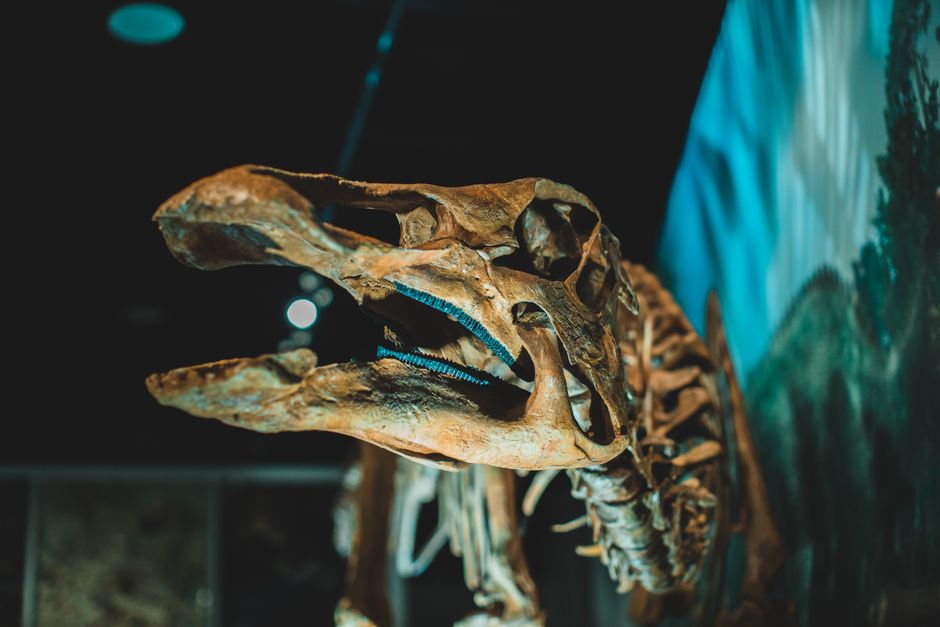
The study, published in the journal Proceedings of the National Academy of Sciences, centres on a partial hind limb bone belonging to Aratasaurus museunacionali, a theropod dinosaur that roamed during the Early Cretaceous period. The bone was excavated in 2008 at a geological site in northeastern Brazil called Mina Pedra Branca, within a rocky formation long celebrated for its exceptionally well-preserved fossils.
What the researchers found inside the fossil
Using a combination of advanced microscopic imaging and chemical analysis, the team identified oval-shaped microstructures inside the bone's vascular canals, the tiny tubes that house blood vessels and nerve fibres. The structures closely resemble red blood cells in appearance and location.
Critically, the researchers also detected chemical traces of heme, a molecule found in haemoglobin, the protein responsible for carrying oxygen in red blood cells. According to the study's authors, this marks the first time heme has been detected directly within such structures in a dinosaur fossil, rather than simply nearby or in association with the surrounding material.
The team also found traces of manganese oxides within the bone, minerals that may have helped stabilise and preserve the cellular structures over geological time. Scientists believe the site's low-oxygen burial conditions, created by stagnant waters that slowed decomposition, played a central role in keeping the organic material intact for so long.
The Australian scientist leading the research
The study's lead author is Kliti Grice, an organic geochemist and Distinguished Professor at Curtin University in Western Australia. Grice said the quality of the fossil's preservation, combined with the team's multi-pronged analytical approach, strengthened the broader argument that biological structures and molecules can survive inside ancient fossils far longer than previously assumed.
"The exciting implication is not just what we have found in this dinosaur. It is that we now have approaches that can be applied to other fossils to ask how much original biological information may still be hidden within them," Grice said.
She noted that what sets this study apart from earlier work is the combination of multiple lines of evidence, including the structures' physical appearance, their location inside the bone, their mineral composition and associated chemical signals. Past studies had reported either cell-like structures or possible remnants of blood chemistry separately, but this research brings those threads together for the first time.
A long and contested field of research
The search for preserved soft tissue in dinosaur fossils has a contentious history. Studies dating back to the late 1990s reported structures resembling red blood cells in dinosaur and other reptile fossils, but researchers have long debated whether those findings reflected genuine biological material or were the result of contamination or misidentification.
Soft biological material, including tissues, cells and other organic samples, rarely survives the fossilisation process, making any such discovery inherently controversial. Not all experts are yet convinced that the structures identified in this latest study are truly red blood cells, and the authors themselves are measured in their conclusions.
If further specimens yield similar evidence, Grice said, the findings "could potentially help us ask much more sophisticated questions about the physiology of extinct animals."
For anyone interested in how blood chemistry research is pushing scientific boundaries, this latest discovery joins a growing body of work exploring what biological signals can be detected and preserved. Other recent research has also shown how biological clues locked inside living creatures can reveal surprising truths about how bodies age and function.
The findings represent a significant step forward for palaeontology, suggesting that the biological record preserved inside ancient bones may be far richer than scientists have previously imagined.

