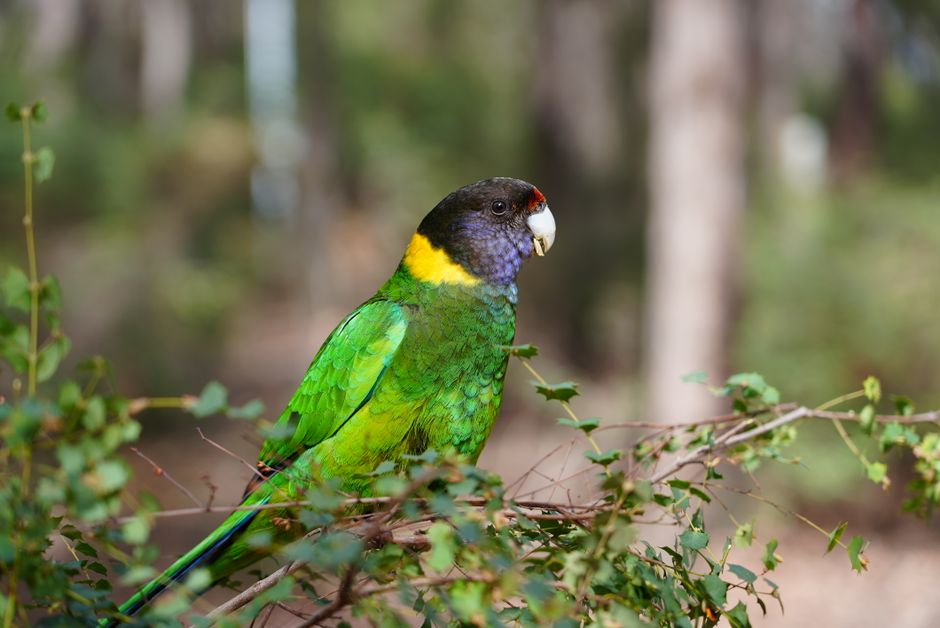
The federal government has secured $2 million worth of H5N1 bird flu vaccines to protect Australia's most vulnerable native species in captivity, as confirmed cases across the country surpass 230 and the outbreak continues its rapid spread into the continent's interior.
Agriculture Minister Julie Collins announced the vaccination rollout on Tuesday, saying states and territories would begin administering doses in coming days, with each jurisdiction deciding which species to prioritise based on conservation vulnerability and the potential impact of the disease.
"We've been very clear that we cannot stop the H5 bird flu from spreading amongst wild birds, but we can take action to protect the species most at risk, and vaccination is now part of that response," Collins said. "Vaccination activities will be guided, as always, by expert scientific advice."
Why Captive Birds Are Being Prioritised Over Wild Populations
Environment Minister Murray Watt confirmed that vaccinating wild birds at scale was neither practical nor feasible, pointing to a fundamental logistical obstacle: the vaccine requires two separate doses to be effective.
"It is difficult enough to catch wild birds once, let alone twice," Watt said. "Where it is possible to vaccinate wild birds, we will do so, but the priority here is to vaccinate birds that are in our zoos and various other institutions."
Watt added that Australia had been proactively increasing its captive bird populations in anticipation of the virus's arrival, as the strain spread progressively around the globe before reaching Australian shores in June via Antarctic seabirds.
Australia's Chief Veterinary Officer, Dr Beth Cookson, cautioned that vaccination alone would not be sufficient to protect bird populations. "Influenza vaccines are not 100 per cent protective," she said. "It's not a standalone solution; biosecurity will remain very important to the protection of these species."
Cookson noted the vaccine had been developed specifically for birds and had undergone 18 months of safety and efficacy testing across different species and size groups. Even so, she stressed that birds testing positive for the virus would need to be culled regardless of their vaccination status.
Outbreak Timeline: From Coastal Seabirds to Inland NSW
Since H5N1 was first detected in Australia in June, the outbreak has accelerated markedly. The nation has now recorded more than 230 confirmed cases, and last week saw its first mass casualty event involving Australian wildlife — a threshold that prompted authorities to shift their reporting approach from individual bird counts to tracking major mortality events and newly affected locations.
Among the most significant recent developments, the first case of H5N1 in inland Australia was confirmed over the weekend, detected in western New South Wales near the junction of the Murray and Darling rivers on the Victorian border. Experts described the detection as a warning sign that the virus is likely to spread rapidly across the broader continent.
In New South Wales, two Greater Crested Terns — one found near Narooma on the south coast, the other near Wentworth in the state's west — tested positive following examination by CSIRO's Australian Centre for Disease Preparedness. It marked the first time an Australian native bird species had returned a positive H5 result in NSW, bringing the state's total confirmed cases to four. South Australia has also reported a sharp rise in detections, with more than 80 birds — mostly terns — identified in recent weeks.
More than 3,558 calls have been made to the Emergency Animal Disease Hotline since June, and public reporting has been described by authorities as critical to early detection efforts. Surveillance teams remain deployed at Narooma and Wentworth to monitor for further cases.
Poultry Industry on Alert as Government Weighs Vaccine Feasibility
While the H5N1 strain has wreaked havoc on wildlife, Collins confirmed there is currently no evidence the virus has entered Australia's poultry industry, and the risk to human health remains low. The strain has, however, spilled over into poultry and livestock overseas — a scenario Australian authorities are working urgently to prevent.
"Overseas we have seen it spill over into agriculture, so we're doing everything we can do to keep it out," Collins said.
The government is actively examining whether a poultry vaccination program is feasible, though a rollout would face significant complications. Dr Cookson noted that some countries have imposed trade restrictions on exports of vaccinated poultry, which would have implications for Australian producers. Biosecurity measures — chiefly keeping farmed birds physically separated from wild populations — will remain the primary line of defence for the industry.
The Albanese government has committed $113 million to its overall outbreak response. Conservation groups are pressing for the immediate deployment of a separate $200 million fund aimed at bolstering broader wildlife resilience. The scale and speed of the H5N1 strain's global spread has drawn comparisons to historical patterns of influenza pandemic transmission, underscoring the urgency of coordinated national action.
Members of the public who spot sick or dead birds or marine mammals are urged to avoid contact and report immediately to the Emergency Animal Disease Hotline on 1800 675 888.