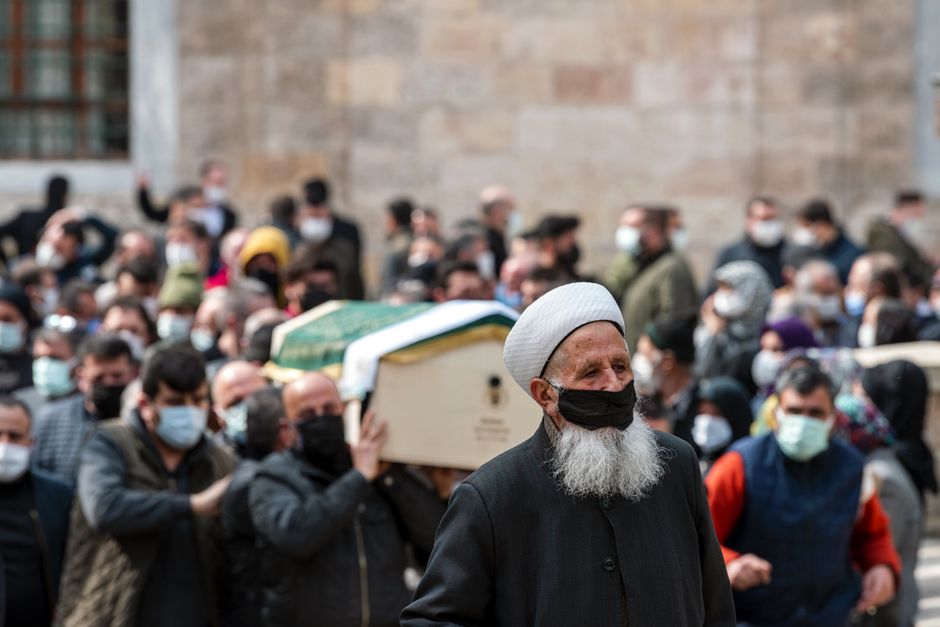
Funeral ceremonies for former Iranian supreme leader Ali Khamenei have opened in Tehran with fierce anti-American chants and calls for vengeance, drawing enormous crowds to the Grand Mosalla religious complex on Saturday as delegations from Hezbollah and Hamas joined the mourning. The ceremonies, expected to last throughout the week, are forecast to rank among the largest public funerals in modern history.
A Funeral Turned Political Defiance
Supporters dressed in black packed the vast Grand Mosalla complex, where Khamenei's body is lying in state, as temperatures in Tehran climbed toward 40 degrees Celsius. Water mist was sprayed over the crowds to provide relief from the heat. Mourners waved blood-red flags — symbols in Shia Islam of vengeance and justice — while others beat their chests in grief beneath a large portrait of the late leader.
Chants of "death to America" and "revenge, revenge" rang through the complex, framing the occasion as much as a political statement as an act of mourning. One attendee, a 37-year-old professor identified as Reza, expressed deep personal devotion to the late leader.
"We came because we promised the supreme leader we would stand by him to the very end," he said. "For a long time, we shouted that we would sacrifice our lives for the leader, but it was he who sacrificed himself for us."
Another mourner, Arash Rahimi, was equally unambiguous about the mood: "Everyone here has come to avenge the blood of their supreme leader. As our leader has said, we have a blood feud with the United States. Our relations with the United States will never be good."
Hezbollah and Hamas Delegations Meet Iranian Foreign Minister
Delegations representing both Hezbollah and Hamas — militant groups backed by Tehran — attended the opening ceremonies and held meetings with Iranian Foreign Minister Abbas Araghchi, according to Iranian state media. Their presence underscored the regional dimension of the funeral, which has drawn representatives from more than 100 countries, including officials from Pakistan, Russia, China, India, Turkiye and several neighbouring nations.
Iranian authorities have projected attendance of between 15 and 20 million people across the full week of commemorations — a figure that would place these ceremonies among the most attended public funerals on record.
Background: Khamenei Killed at the Outset of US-Israel Conflict
Khamenei, who was 86, was killed on 28 February during an airstrike on the first day of the US-Israel conflict with Iran. His funeral had originally been scheduled for March but was postponed as the war continued. Much of central Tehran has been placed under tight security for the duration of the commemorations.
Iranian military commanders have issued stark warnings against any further aggression during the funeral period. Commander Ali Abdollahi, in a statement carried by state media, cautioned: "We warn the enemies of Iran, especially the U.S. and the Zionist regime [Israel], to avoid any miscalculation and to think about the harsh retaliation our armed forces would make to any threat and aggression against our country."
Procession to Span Iran and Iraq Before Final Burial in Mashhad
Khamenei's coffin will remain at the Grand Mosalla for three days before a multi-day procession takes it to the holy city of Qom, then across the border into Iraq for ceremonies in Najaf and Karbala. It will return to Iran for burial at the Imam Reza Shrine in Khamenei's hometown of Mashhad on Thursday.
Khamenei has been succeeded as supreme leader by his son, Mojtaba Khamenei, who is not expected to attend the funeral due to security concerns following reported assassination threats against him.