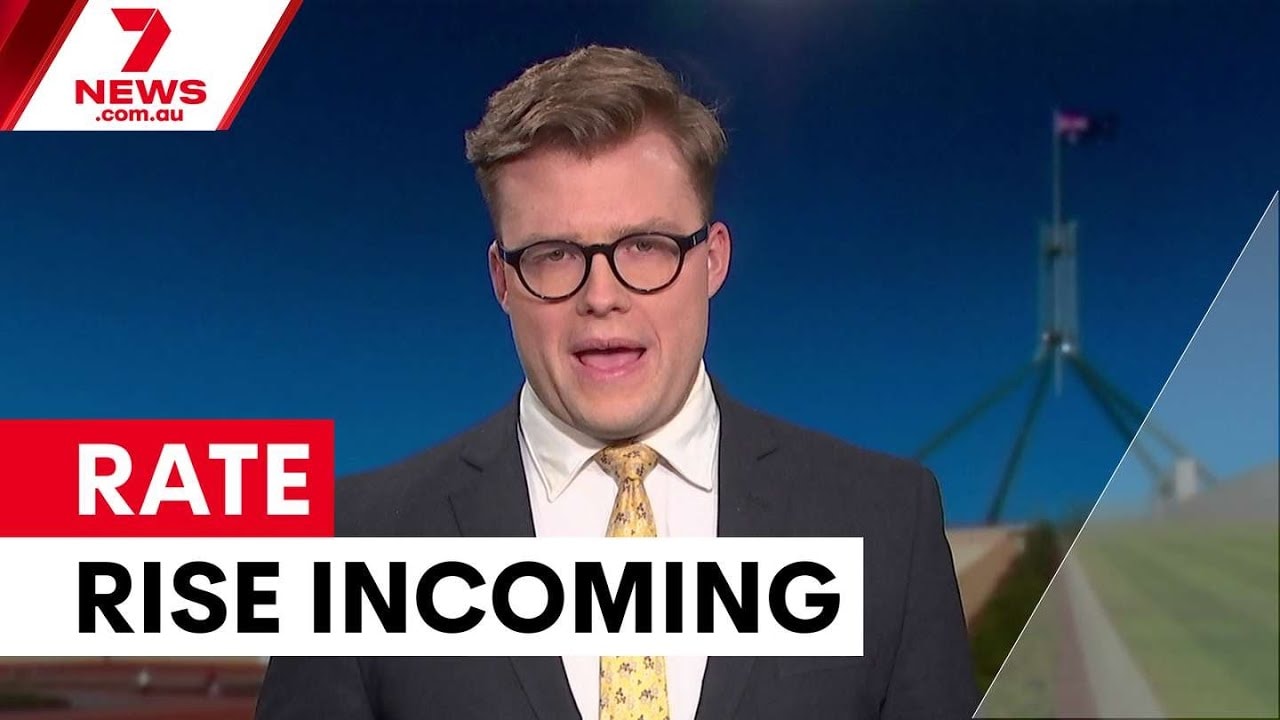
Prime Minister Anthony Albanese has arrived in the United States for a week-long visit that combines a push for international rules on artificial intelligence with the formal launch of Australia's campaign for a seat on the United Nations Security Council — one of the most coveted positions in global diplomacy.
Albanese landed in San Jose on Saturday morning Australian time, where he was greeted by Australia's ambassador to the US, Greg Moriarty. He then headed to Apple's California headquarters for a meeting with the company's former chief executive Tim Cook, before flying to New York to formally launch the Security Council bid on Sunday, local time.
A Middle Power's Case for a Seat at the Top Table
At the heart of Australia's Security Council pitch is the argument that middle-sized nations must have a stronger voice in shaping the global response to artificial intelligence, armed conflict and rising geopolitical tensions. The campaign slogan — "We listen. We partner. We protect." — will anchor promotional material featuring a kangaroo in the logo, as Australia seeks one of 10 non-permanent seats on the 15-member council for the 2029 and 2030 terms.
Albanese pointed to Australia's deep history with the UN as part of the country's credentials. Australia helped found the organisation and held the very first Security Council presidency in 1946. It has since served five terms on the council, including a two-year stint in 2013 and 2014 during which it was instrumental in pushing for accountability over the downing of Malaysia Airlines flight MH17, expanding humanitarian access in conflict zones, and advancing women, peace and security frameworks.
"The hopes of Australians are the hopes of people everywhere — to live in peace and to build a better future," Albanese said. "Australia played a pivotal role in the founding of the United Nations — because we have always understood how important it is for small and mid-sized nations to have their voices heard on the challenges facing our world."
Foreign Affairs Minister Penny Wong described Australia as an "active and ambitious middle power" with a practical role to play on the world stage. A campaign brochure highlights Australia's peacekeeping record, noting that more than 65,000 Australian personnel have served in more than 60 UN and multilateral peace and security operations since 1947.
Australia and Finland are currently the only two countries to have nominated for the two available positions from the Western Europe and Others Group. Despite being uncontested, both nations still require a two-thirds majority in a secret ballot of UN members present and voting. If all 193 member states participate, that threshold would require at least 128 votes. The ballot is scheduled for June 2028.
Albanese Calls for an AI Non-Proliferation Framework
Beyond the Security Council campaign, Albanese used his US visit to press the case for binding international governance of artificial intelligence — comparing the challenge to past efforts to contain nuclear weapons. He called on Washington and Beijing to work toward a global AI agreement modelled on nuclear non-proliferation principles, arguing that nations must establish international rules to ensure humans "remain in control" of the technology.
The appeal came as US President Donald Trump doubled down on America's drive for AI supremacy, declaring the United States must stay ahead of China and announcing an "AI force" to guard against the technology's potential for widespread destruction. "We are leading China, and the rest of the World, and I intend to keep it that way!" Trump wrote on social media, adding he would not "hinder or stifle" industry growth.
Albanese said he hoped for progress on AI cooperation when Trump meets Chinese President Xi Jinping at the White House this week. He acknowledged the scale of the challenge but argued middle powers could help bridge the divide between the two technological giants.
"The truth is, they're the big two giants here," Albanese said. "We want to see co-operation. We've seen that in the past with new technologies, even on nuclear weapons, for example. I think middle powers, such as Australia, have a role to play here as well."
"We need to make sure we shape its use in the interests of humanity, rather than allow it to shape us," he added. "This is something that goes beyond national boundaries and that's why it requires discussion at the multilateral level."
The Albanese government is also expected to use Australian addresses at the UN to highlight national standards it has set for AI companies, including requirements that they be powered by renewable energy, and obligations on data centres to underwrite new power supply.
Online Safety and the Apple Visit
Digital safety featured prominently in the early days of the trip. Albanese met with Tim Cook following an invitation extended after the pair spoke in June about Australia's world-first social media ban for children under 16. Apple has indicated its own parental control measures were partly inspired by Australia's legislation, and Albanese received demonstrations of how those protections are implemented on Apple devices.
The prime minister said countries around the world were looking to Australia's approach as a model. "Other nations are reaching out, looking at the work that Australia has done," he told reporters on arrival. Online safety will continue to feature at the UN, with Australia planning to highlight efforts to force tech companies to remove harmful content through a digital duty of care, as well as moves to give social media users the ability to opt out of algorithmic feeds.
Albanese is also set to receive an Atlantic Council Global Citizen Award on the sidelines of the UN high-level week, in recognition of his role in promoting security and stability in the Indo-Pacific — an agenda that has also driven Australia's broader Pacific security engagement in recent months. He will be recognised alongside Finnish President Alexander Stubb, Formula 1 president Stefano Domenicali, and actress Cynthia Erivo.