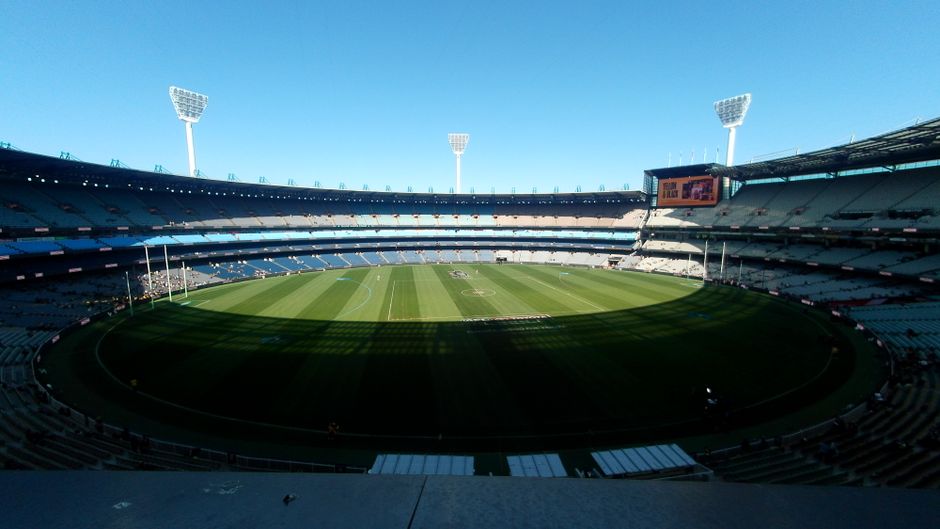
The AFL has locked in a three-year State of Origin schedule that leaves Victoria on the sidelines for the 2027 edition, with Western Australia set to host South Australia in Perth before the Victorian side returns to action in 2028.
The announcement confirms what lies ahead for one of Australian rules football's most storied traditions: Western Australia versus South Australia in Perth in 2027, followed by South Australia hosting Victoria at Adelaide Oval in 2028, and then Victoria meeting Western Australia in Perth in 2029.
State of Origin's return a catalyst for long-term commitment
The concept was revived in 2026 after a lengthy absence from the football calendar, with Victoria defeating Western Australia in front of a sold-out Perth Stadium crowd of more than 58,000. That result and the spectacle surrounding it appear to have been the driving force behind the AFL's decision to formalise a multi-year structure.
AFL chief executive Andrew Dillon said the quality of the contest exceeded expectations and demonstrated the format had a genuine long-term future.
"No one really knew what the game was going to be like, and what we saw was actually footy at its finest, the ball moved around … it was a quick game, lots of scoring," Dillon said.
"State football is one of the great traditions of our game, and we are pleased to see it continue in 2027 and beyond after the huge success of its return earlier this year which saw more than 58,000 people fill [Perth] Stadium in Perth."
Dillon said locking in three years of fixtures would give fans, players, clubs and stakeholders the certainty needed to fully invest in the state rivalry concept.
WA and SA reigniting a rivalry not seen since 1998
The 2027 match will be the first time Western Australia and South Australia have met in State of Origin football since 1998, when the two sides played at Football Park in front of around 18,000 fans, with South Australia claiming victory by 36 points.
Western Australia's Origin chair of selectors and former Eagles great Glen Jakovich made clear he was relishing the renewal of that interstate contest.
"Same reason, they think they're better than us," Jakovich said of the South Australians. "They don't leave the welcome mat out for you, so I've got to return the favour. I've got up to six or seven months to start planning the demise of South Australia."
Jakovich also reflected on the significance of this year's match against Victoria, singling out Carlton captain Patrick Cripps as an example of what Origin means to players at the highest level.
"Led by Patrick Cripps … at his age, two Brownlow Medals, achieved a lot in football, and he put it right up there as one of the pinnacles of his career," Jakovich said. "He led the state with such great honour, so I look forward to that happening again."
No expansion beyond the three traditional football states
Notably absent from the schedule is any involvement from the so-called Allies concept — a combined team representing Tasmania, New South Wales, Queensland, the ACT and the Northern Territory — which last featured in the State of Origin series in 1998. There is no indication the broader representative structure will be expanded in the three-year window confirmed by the AFL.
Western Australian Premier Roger Cook has already issued a challenge to his South Australian counterpart Peter Malinauskas, proposing a wager on the outcome of next year's game, underscoring the political as well as sporting stakes that State of Origin football carries across state lines.
With the revival of State of Origin football traditions capturing public imagination across codes, the AFL's three-year blueprint signals a confident bet that the format can reclaim its place as a marquee event on the Australian sporting calendar.