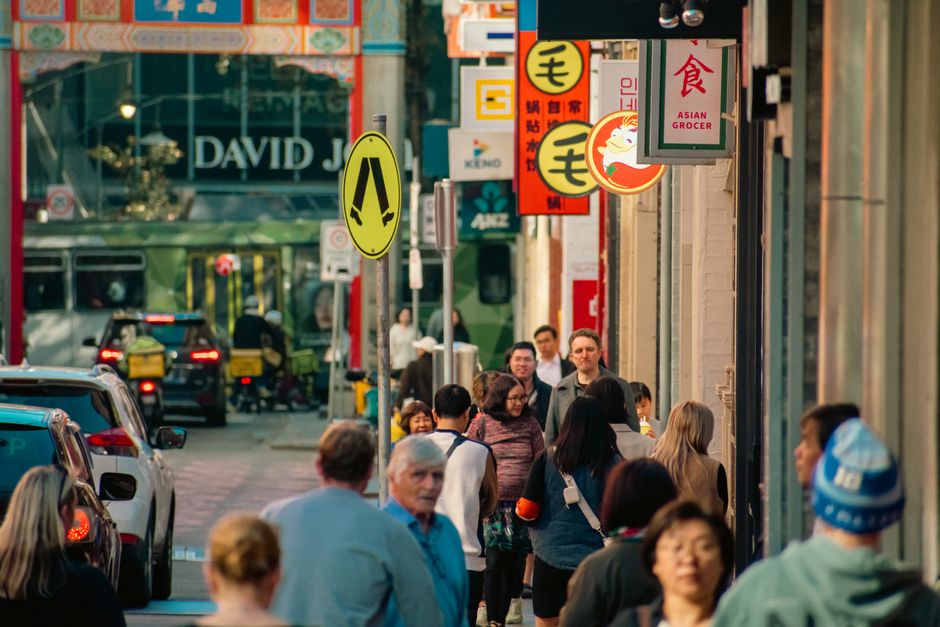
Nineteen David Jones stores across five Australian states will close their doors by the end of 2026, receivers have confirmed, in a sweeping restructure of the struggling 188-year-old department store chain that leaves roughly 6,000 workers facing an uncertain future.
Receivers FTI Consulting announced the closures on Wednesday, November 11, describing the decision as "difficult" but unavoidable if the retail icon is to survive. The stores, the majority of them in suburban locations, are expected to cease trading before the end of December. No precise final date has been set, and staff at the affected stores are currently being consulted over a seven-day period.
The only David Jones store in New Zealand, located at Newmarket in Auckland, will also be shuttered as part of the restructure.
Which David Jones stores are closing
The closures span New South Wales, Victoria, Western Australia, Queensland and the Australian Capital Territory, with New South Wales bearing the heaviest losses at seven stores. The full list of affected locations is:
- New South Wales: Macquarie Centre, Macarthur Square, Parramatta, Wollongong Central, Hornsby, Green Hills, and Warringah Mall
- Victoria: Malvern Central, Highpoint, and Glen Waverley
- Western Australia: Hay Street Mall, Garden City, and Carousel
- Queensland: Robina Town Centre and Sunshine Plaza
- South Australia: Two stores (locations to be confirmed through the consultation process)
- Australian Capital Territory: One store
Flagship stores in capital city central business districts have largely been spared, with one notable exception: the Hay Street Mall store in central Perth will close, receivers confirmed.
The 19 surviving Australian stores and the retailer's online portal will continue to trade as normal. Some stock at the closing stores will be discounted, while key product lines will be redistributed to the stores that remain open.
Receivers call restructure 'unavoidable'
In a statement, FTI Consulting said the closures were consistent with management's own plan for the business going forward. "The receivers have made the difficult decision to proceed with an urgent restructure of the business, in line with management's plan for the future of David Jones," the firm said.
Staff were informed via an internal memo that the retailer's existing store network was "no longer the right shape for the business", and that the changes were aimed at "creating a network that is financially sustainable for the future." The receivers acknowledged the restructure would have a "material impact" on many employees, and committed to treating all workers with "fairness and respect" through the process.
Receivers said options for redeployment within the company would be explored, though they did not specify how many of the approximately 6,000 staff would retain their jobs. David Jones entered voluntary administration earlier this year after years of mounting losses left the business unable to meet its rent obligations and manage day-to-day operations.
Expressions of interest from potential buyers of the business were due by close of business on Friday.
Union and business leaders react
The retail workers' union, the Shop, Distributive and Allied Employees Association, described the announcement as a "sad and stressful day" for all David Jones employees. SDA vice president Bernie Smith called on other retailers to absorb as many displaced workers as possible, saying the union had already reached out to alternative employers on workers' behalf.
Smith described the collapse as a "wake-up call" for the broader retail sector, saying management had been given numerous opportunities to modernise the business model but had not acted on them in time.
Business Sydney executive director Paul Nicolaou called the store cull a "huge blow" but said a total collapse of the brand had to be avoided at all costs. He pointed to strong crowds at David Jones stores in recent weeks as evidence that customers still wanted the retailer to survive, albeit in a reduced form, and urged shoppers to continue supporting its remaining stores in the lead-up to Christmas.
A founding family member's warning
Charles Edward Lloyd Jones, a fifth-generation descendant of the founding family and the last family member to work in the business, said the retailer's troubles illustrated a fundamental problem with the direction of modern department store retail. Lloyd Jones, 68, left the business in 1993 after serving as store manager at the Chatswood, Bankstown, and Bondi Junction locations.
"If you don't have a unique offer, then it's a race to the bottom with price," he said. "And then if it's a race to the bottom with price, people start cutting staff and when they start cutting staff the service diminishes."
Asked whether he had ever found himself wandering a David Jones floor unable to locate a staff member to complete a purchase, Lloyd Jones did not hesitate. "Too many times," he said.
Despite the bleak outlook, he maintained there was still a place for personalised, carefully considered in-store retail experiences, suggesting the model itself was not obsolete, only the execution of it. The question now is whether whatever emerges from the receivership process will be able to deliver on that promise. David Jones gift vouchers remain at risk for customers amid the ongoing administration proceedings.

